Recycling
Two Anniversaries, One Partnership: Honoring CET’s 50th & RecyclingWorks MA’s 15th
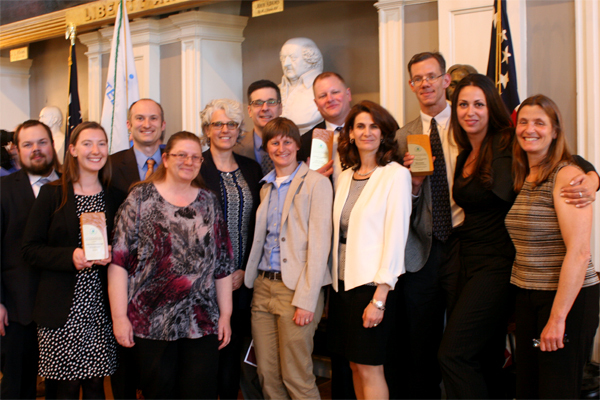
This year marks two milestones worth pausing for: CET’s 50th anniversary and the organization’s 15th year of operating the RecyclingWorks in Massachusetts (RecyclingWorks MA) program. Since its inception, CET has administered RecyclingWorks MA under contract to the Massachusetts Department of Environmental Protection (MassDEP), translating policy goals into practical, on-the-ground solutions for businesses and institutions across the Commonwealth.
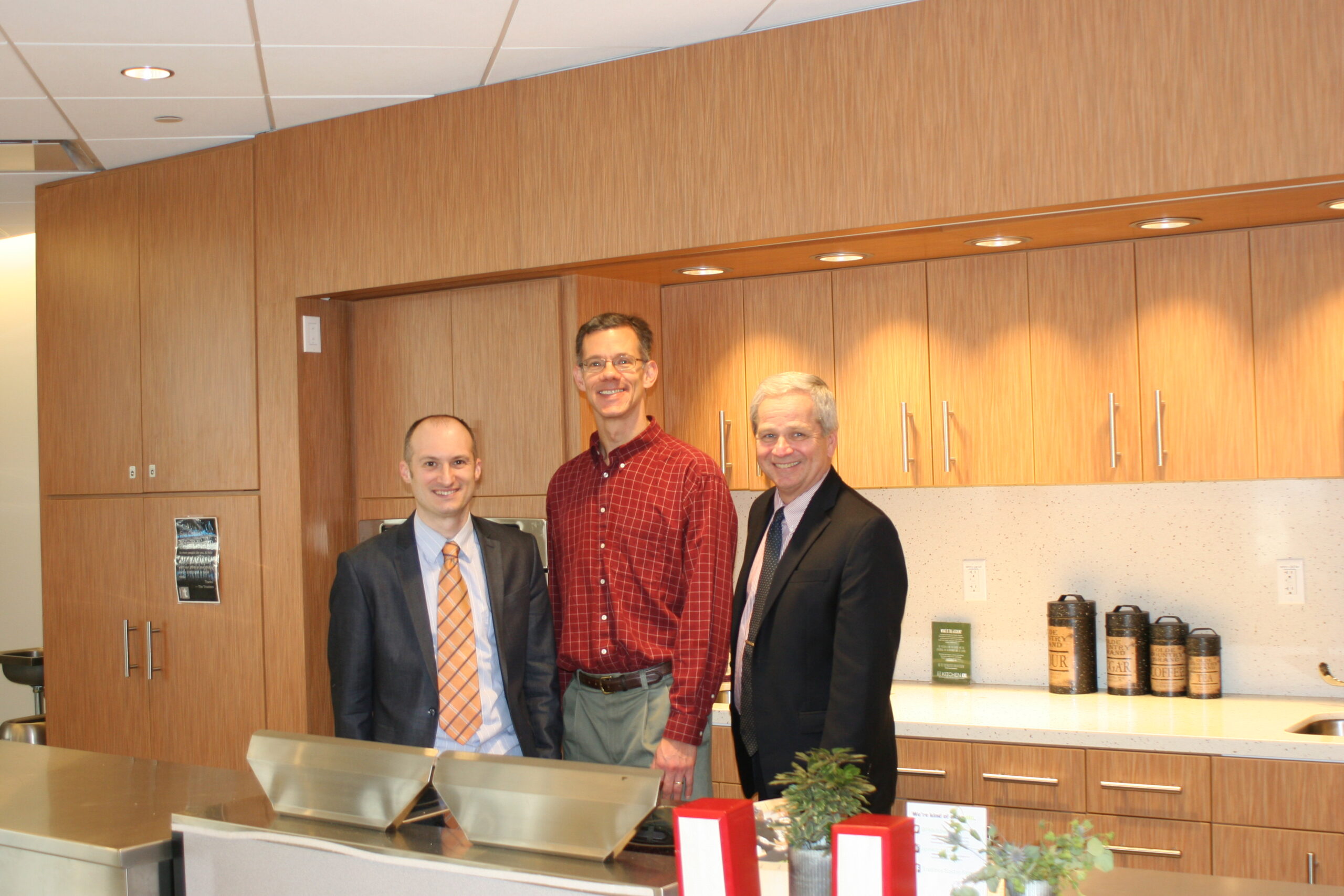
In this Q&A, we sit down with Lorenzo Macaluso, Chief Growth Officer at CET, and John Fischer, Deputy Division Director for Solid Waste at MassDEP, to reflect on the program’s evolution and what the next chapter of commercial waste reduction demands.
RecyclingWorks MA has now been operating for 15 years— what need was the program originally designed to address?
John: The origin of the RecyclingWorks MA program was set within our Solid Waste Master Plan. We were really looking to ramp up our work on commercial waste reduction. Our programs weren’t strong or extensive enough, and we needed to do more to reduce waste from businesses and institutions. We were also working to ensure compliance with waste disposal bans, but the only assistance we had to offer was our own staff, who were also issuing enforcement, which didn’t create a great working relationship. We needed a stand-alone technical assistance program that would work with businesses, separately from us. RecyclingWorks MA was critical to moving forward in a serious way.
What has been the most important aspect of how Massachusetts approaches commercial waste and materials management over the past decade?
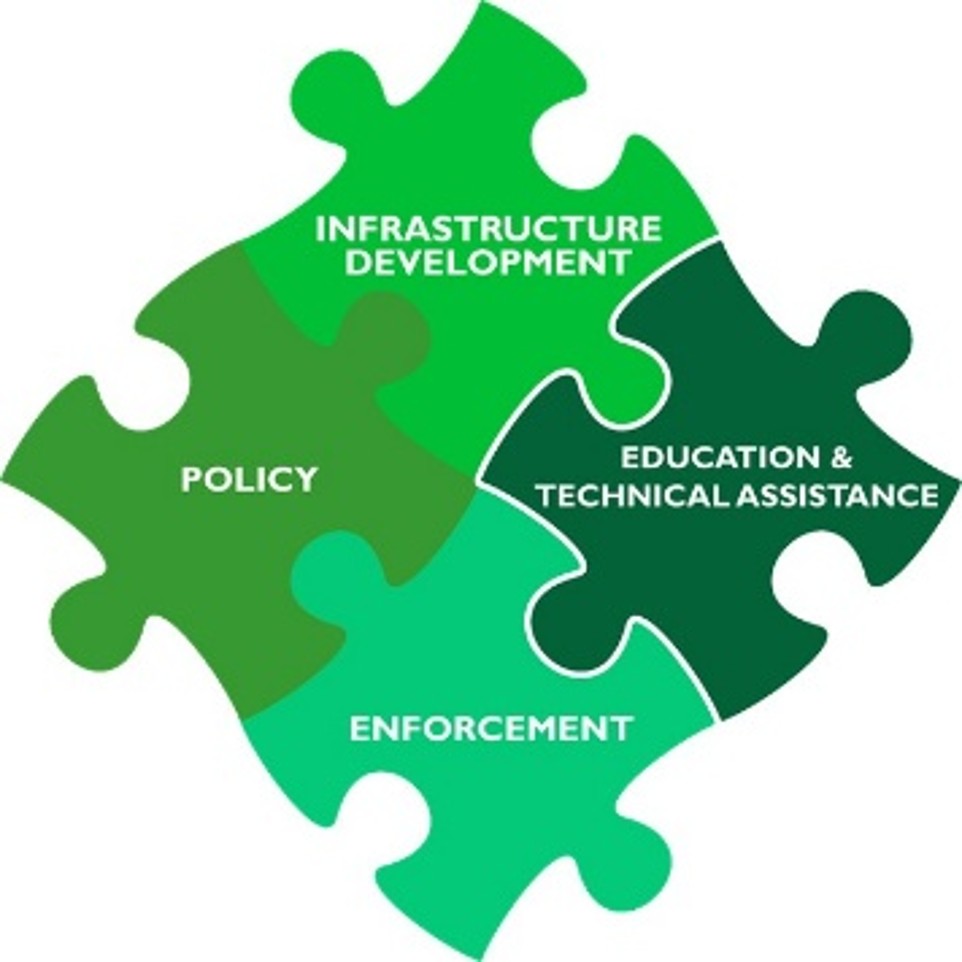
Lorenzo: I often think of [what has worked for Massachusetts] as a puzzle where the right regulatory policy has set the tone for the infrastructure investment, enforcement, and adoption to follow. We’ve seen consistent investment in infrastructure, through both grants and permitting process allowances…and enforcement is also well done and uniquely approached in MA.
Finally, the education and technical assistance that we’re doing through RecyclingWorks MA is helping all those puzzle pieces work together successfully. That is how environmental, economic, and social impacts can be maximized and result in market transformation at scale.
John: We are also fortunate to have a consistent year-to-year funding source. We’ve been able to invest in the program and allow it to grow over time, while avoiding drastic budget swings that can make it difficult for programs like this to keep staffing commitments in place. Celebrating the 15th anniversary of the program shows how effectively it has been sustained.
RecyclingWorks MA is often cited as a national model. What do you think makes it successful, and how can other jurisdictions implement similar programs?
Lorenzo: Well success doesn’t happen by just investing for one year in a program like this. While short-term investments can still have a measurable impact, long-term sustained support is vital. It takes time for the marketplace to shift and evolve. It takes time to reach the sheer number of entities that need to be engaged.
It’s important to acknowledge that what works in Massachusetts and some of the surrounding states, may not work everywhere else. Economic drivers such as disposal fees and available infrastructure vary. Strategies for implementing programs like this will differ from place to place. The lessons learned and tactical actions in commercial kitchens at all levels of the EPA food scale have transferred well in other states, though.
John: I think there are different versions of this type of program that states can implement. They can implement a technical assistance provision component, web-based resources and guidance, or the hotline component. There are elements of the program that can be really implemented anywhere. The more a state can ensure stable funding for a program like this, the more value it will gain from the program.
Lorenzo: Something smart in the way you’ve managed RecyclingWorks MA, John, is that it grew incrementally. We started at a small scale that was appropriate at the time and learned where we needed to grow and invest more resources over time. The way it has been managed financially has been sustainable, as we’re never out over our skis.
How has the relationship between policy, technical assistance, and real-world business operations evolved through this program?
Lorenzo: When we first started, a large percentage of the audiences we presented to did not know that waste bans existed. Thankfully, that awareness has increased, and we are continuing to increase that.
John: From my perspective, our policy and framework have remained consistent, but we’ve certainly made progress along that path. Our initial food waste disposal ban in 2014 was a major milestone, and then the expansion of that ban in 2022 and the addition of mattresses and textiles to our waste disposal bans were also significant milestones.
That’s why I think programs like RecyclingWorks MA really need to be distinct and sustained over time. This isn’t a three-year initiative where we look around after a few years and say, “OK, that’s taken care of, we can move forward to the next issue.” This is something that really requires sustained support to make it work over time.
What hasn’t changed?
John: No discussion of change in waste over time is complete without mentioning cardboard. We continue to see widespread disposal of cardboard, which is perhaps the most easily recyclable material with the most stable markets around. Businesses may not be focused on recycling as their core priority, so it is up to us to continually remind them of the importance of recycling cardboard and of these assistance programs.
Lorenzo: Something that has not changed over the years is that waste is not most businesses’ top priority. Waste is a relatively small portion of their operating budget, and commercial entities often do not know that there are regulatory requirements, or environmental and social benefits to addressing it. There is a lot to be gained from raising awareness while meeting businesses where they are, being a listener first, and then helping them overcome challenges that align with their needs while also helping them with compliance.
CET has administered RecyclingWorks MA since day one. How has that long-term role shaped CET’s broader approach to designing and scaling climate change and waste solutions?
Lorenzo: It’s been an amazing experience. When the food waste ban went into effect, we had already been running RecyclingWorks MA for a few years. At the same time, several of the surrounding states implemented similar policies, and there was a national goal of reducing food waste by 50% by 2030. It was a unique moment in time where it raised the profile of what is happening here in Massachusetts within the program, and it afforded us opportunities to talk to several of the other states. We’ve done a lot of advising in New York, Connecticut, Rhode Island, New Hampshire, Maine, and many other states to share some of the learnings. We’ve been fortunate to work with groups like the NRDC and Harvard Food Law and Policy Clinic to do various write-ups and analyses on what has worked here and what is working in other states, so that others can have the benefit of what we have learned.
I’m very excited about a project we’re working on right now that is funded by ReFED through their Catalytic Grant Fund. We are finding other organizations around the country that we can train and empower with the knowledge, skills, and tools to engage their business community to see similar impacts. We’re expanding our reach to Wisconsin, Oregon, California, and other places so that program implementers outside of Massachusetts are also able to compress their timelines and gain the benefit of our findings.
What lessons from RecyclingWorks MA have informed CET’s work in other cities and states?
Lorenzo: One of the things that makes us effective is meeting businesses where they are. We know that diverting waste is not the top priority for most businesses and that some of the most time-consuming parts of the process are figuring out who to call, where to go, and where to send their waste. To provide those answers, we conduct a landscape analysis. Over time, we have developed a geography-based searchable database with a very robust list of solution providers that handle all the different material types.
That’s a lesson that we’ve translated to whoever we’re working with; you must know local service providers so that you can play matchmaker. And when we’re doing one-on-one work with businesses, we’re listening to them, we’re understanding their needs, we’re analyzing the materials that they have, and with that information, we connect them with solution providers so that they can quickly and easily facilitate a business relationship to divert materials. That’s the secret sauce: making those connections easy.
From a growth and market perspective, what does it take to move waste reduction from “the right thing to do” to standard business practice?
Lorenzo: We are learning more about that every day, but there are more drivers now than ever before. The shrinking disposal capacity puts consistent economic pressure on waste systems, and the infrastructure for recycling and food waste diversion has really grown over time. Recognition of the social benefits of food waste is also very motivating. While some people couldn’t care less about waste reduction, those same people may be motivated to take action on increasing food donation and addressing food insecurity. Another driver is the climate impact; waste is finally getting recognized for the associated greenhouse gas emissions. For businesses that have climate goals, like ESG reporting requirements, these programs are measurable. We can get real data with invoices behind them and often weight or volumes that verify diversion quantities. Therefore, waste reduction is a tangible tactic for climate goals and ESG reporting that we’re seeing as a driver to help make it become standard business.
Also, as the food waste disposal ban in Massachusetts evolves over time, smaller businesses will need to plug in. That’s where hauler route density really starts to come into play—small businesses can access the services more readily because the financials make sense for them. It becomes more standardized and more readily available when there is an existing level of activity in the marketplace.
From the agency side, what has RecyclingWorks MA made possible that regulation alone could not?
John: When we talk about our work, especially with waste disposal bans, one of the metrics people are most interested in is the number of enforcement actions that we’ve issued. While that’s an important metric, I always take a step back and say what we’re really after is compliance with our waste disposal bans. We care about compliance because when we reduce the amount of material going to disposal facilities, we reduce our reliance on disposal capacity.
Oftentimes, issuing enforcement alone isn’t the most effective way to get a business into compliance. We have found that the combination of enforcement and technical assistance works very well. With some businesses, there’s less need for enforcement, but having a technical assistance provider to support them is what they need to move forward with reducing material sent for disposal.
What has been great about the RecyclingWorks in Massachusetts program is because we’ve had CET running that program all this time, there has been a lot of institutional knowledge developed…and carried forward over the years. That’s valuable when working with businesses because you need to understand the marketplaces and dynamics of resources specific to Massachusetts. We’ve been able to maintain a lot of continuity in our MassDEP staffing as well. I’ve been here since the beginning, working on the RecyclingWorks MA program for 15 years, so we have our own institutional knowledge about the program and how it works. We’re able to have a well-established, longstanding program that can make a great impact in the state.
How does RecyclingWorks MA support MassDEP’s Solid Waste Master Plan goals and commercial waste reduction progress?
John: The Solid Waste Master Plan is typically developed in 10-year periods, and as I mentioned earlier, RecyclingWorks MA came out of the development of our 2020 Solid Waste Master Plan. Now with our 2030 plan, it remains a high-priority program, [especially] because commercial and institutional waste is a significant part of our waste stream, and there are still significant gains to be realized with commercial waste reduction, especially from larger businesses and institutions.
Something great about the Solid Waste Master Plan is that we have a focus on priority material categories. Yes, we have an aggressive [quantitative] disposal reduction goal, but we don’t just focus on that overall disposal reduction goal; we focus on what materials in the waste stream are going to be the best targets to make the greatest progress towards that goal. Then we can put efforts and resources to where we can get the most bang for our buck. In the case of the RecyclingWorks MA program, that’s translated into doing a lot of work with food waste reduction because food waste, like in most states, is our best opportunity to reduce our disposal.
Lorenzo: There’s a subtle piece in what John was saying that I think is important to draw out. Prioritizing “reducing disposal,” as you’ve said, is critical for a few reasons. We have shrinking disposal capacity not just in Massachusetts, but all of the Northeast states, and at the same time, we are seeing increasing disposal costs. By focusing on reducing disposal overall, it opens up all levels of the EPA Food Waste Reduction Scale as strategies to comply with state goals. This can be more effective than, say, prioritizing a recycling rate, a simple math equation of how much is recycling and how much is going in the trash.
What role do data, business feedback, and on-the-ground implementation play in shaping future policy?
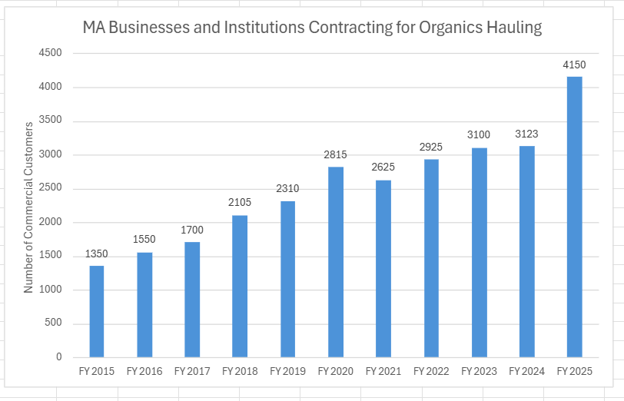
John: Every year, the RecyclingWorks MA program gathers data on the number of business and institutional customers that receive separate food waste collection services, which I think is one of the more interesting metrics we gather.
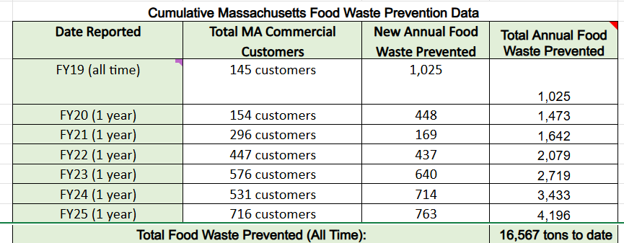
We also have regular checks with the program team, including annual reports where we talk about the program work plan, how it has gone this year, and what we want to focus on in the year ahead. That’s an opportunity for us to absorb the more qualitative learnings from the program and technical assistance delivery and identify potential opportunities to focus on in the year or years ahead, perhaps shining a light on something that maybe we’re not really focused on that we want to dig into a little bit more. For example, the work we’ve done on reusable takeout containers and developing guidance was something that evolved over time and got added to the work plan a couple of years ago, producing a really valuable product.
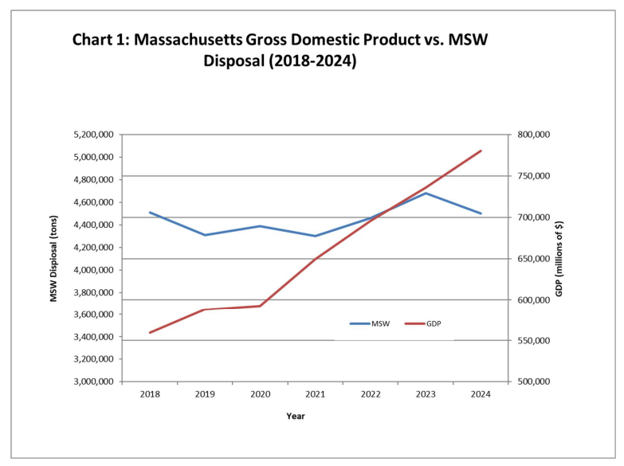
Lorenzo: One of my favorite pieces of data that John often presents at Solid Waste Advisory Committee meetings is that year over year, Massachusetts GDP is going up, but disposal metrics remain relatively flat. That’s a success story in and of itself, but it also dispels the myth of environment versus economy. We are seeing true economic gain while also chipping away at disposal reduction.
As we look toward the next 15 years, what emerging challenges are you most focused on addressing?
John: One material that we’ve been thinking about a lot recently is construction and demolition waste materials. While we’ve made a significant effort to try to reduce the disposal of construction and demolition waste, that’s the area where we have seen the biggest increase in our waste stream. We rely a lot on a mixed waste processing model, but we’re also looking more upstream because we want to accomplish more diversion than processing facilities alone can plausibly achieve. We need to expand our deconstruction practices to reduce the disposal of construction waste over the next 10-15 years.
We are also going to focus on addressing smaller sources of food waste. We’re proud of what we’ve accomplished so far, but at the same time, we see that we’re annually disposing of more than 900,000 tons of food material in the trash. It brings a little dose of humility—as great as the work we’ve done is, we have a lot more work to do.
How can Massachusetts (and programs like RecyclingWorks MA) continue to lead nationally?
John: We need to stay the course and continue to build on our progress. We also need to keep our eyes open and continue learning because we can’t fall into an automated approach. Every material we work with is a little bit different, with different markets, different players, different economics, etc. We need a holistic view of what’s happening around us so that we can take the materials that we’re disposing of and really figure out the best strategies to maximize those opportunities to make the best progress.
Lorenzo: We know infrastructure is necessary to change waste systems, but it is also people-driven. Someone must decide to take action and create a new diversion program, and then people need to sort materials into the right containers for the program to actually work. Finding the connection points between our priorities and the business community and health departments are relationships that are key. We’re only one organization; we’re not going to be able to reach every single Massachusetts business by ourselves. We need that collaboration to really maximize the impact.
Over the last 15 years of this program, what has made you the proudest?
John: I’m most proud of the degree to which we are looked to as an example. I’m proud that others find the work that we’ve done worth learning about and worth trying to replicate. It’s meaningful to me that others see that value in what we’ve done.
Lorenzo: I am also proud of the stories I hear from staff about our business interactions. The best stories are of people seeing impact in their businesses and communities, through diverting food or creating compost for their community, and we highlight some of those through case studies. When they can see that circularity and connection, and we can tell that story, that’s really exciting to me.
Final Reflection
After 15 years, what stands out most about RecyclingWorks MA is the partnership behind it. MassDEP provides the program funding and sets the direction, and CET works alongside businesses and institutions to turn those goals into everyday practice. That collaboration has built trust and a shared understanding of what helps organizations reduce waste. For states looking to strengthen commercial waste reduction, the experience points to a few essentials: a clear policy framework, stable funding, practical technical assistance, good data, and partners who stay at the table long enough to learn and adapt together.