
Composting
How One of the World’s Largest Rowing Events Reached a 60% Diversion Rate: Waste Reduction at Head of the Charles Regatta
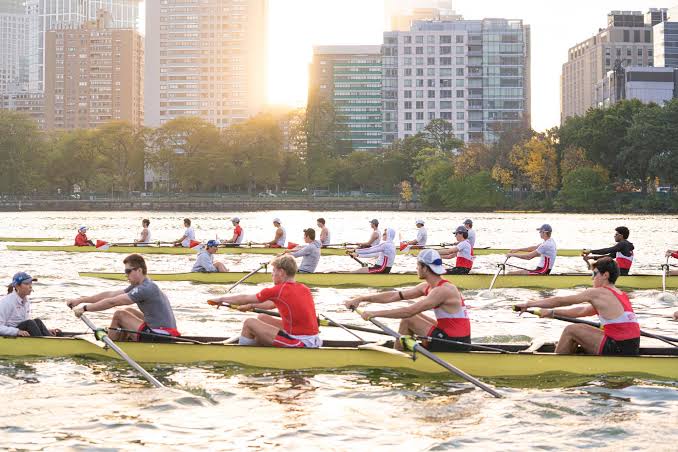
For over 60 years, the Head of the Charles Regatta (the Regatta) has welcomed rowers from around the world to compete on its iconic three-mile course along the Charles River. Attracting approximately 400,000 spectators each year, the Regatta’s three-day event is one of the largest rowing events in the world.
Over time, organizers have developed systems to reduce waste and improve material recovery throughout the whole event. The Regatta’s Sustainability Program reflects a commitment to continuous improvement. As stated on its sustainability webpage, “at Head of the Charles, we strive to make each year’s event more sustainable.”
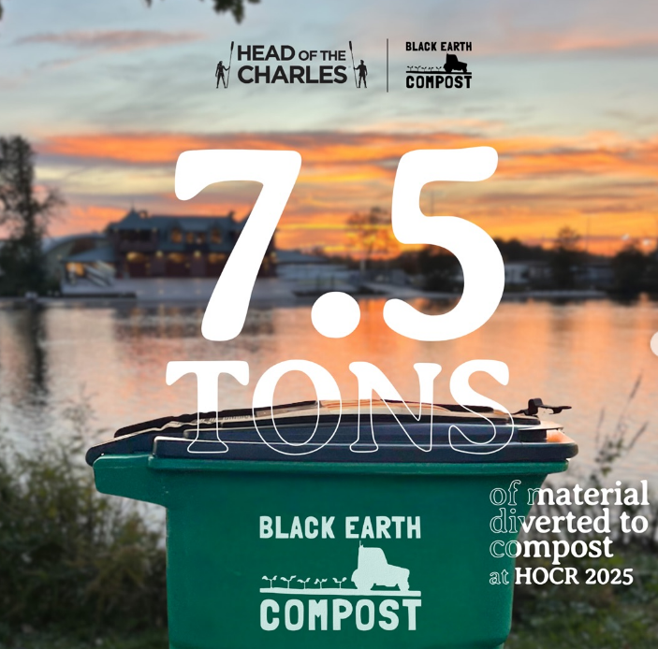
That commitment has produced measurable results. In 2025, the Regatta achieved a 60% diversion rate and successfully composted 7.5 tons of food scraps and compostable materials, the highest amount in the event’s history. 60% diversion in its 60th year!
Building an Effective Waste Reduction Program

The Regatta’s waste reduction efforts have evolved over time. Early efforts focused on litter prevention and sanitation, followed by cardboard recycling and later single-stream recycling. As sustainability became a larger priority, organizers began exploring additional opportunities to reduce disposal and recover more materials.
Chair of the Regatta Sustainability Committee, Courtney Forrester, became involved in these efforts and helped connect the Regatta with Black Earth Compost, creating a pathway for food scrap composting at the event. Forrester is also the Waste Reduction and Compliance Lead at Harvard University, overseeing compliance with waste regulations and spearheading initiatives for zero waste stewardship.
Today, waste reduction is built early into event planning and operations. Organizers work closely with vendors, volunteers, venue partners, and service providers to improve material recovery and reduce contamination throughout the event. The Regatta uses a variety of waste prevention and diversion strategies designed to reduce disposable materials and make proper sorting easier for attendees.
Reducing Single-Use Plastics
One of the most visible changes has been the elimination of single-use plastic water bottles for sale at the event. Competitors and spectators are encouraged to bring reusable water bottles, and water refill stations are available throughout key event areas.
Also eliminated are single-use plastic shopping bags. Vendors are encouraged to provide paper bags or reusable alternatives, and many attendees arrive prepared with backpacks and reusable carrying options.
Working With Vendors to Improve Material Recovery
Food receptacles and packaging represent one of the largest waste streams generated. To address this, all registered food vendors are required to sign a sustainability pledge committing to the use of compostable or recyclable service ware whenever possible.
Each year, approximately 40 food vendors set up in dedicated spaces in high-traffic areas. To support them, a purchasing portal through EcoProducts was established that allows vendors to easily source BPI-certified compostable products. Organizers are also available to answer questions and help vendors identify acceptable materials.
Vendor participation plays a major role in the success of the composting program. When food containers, utensils, and serving materials are third-party certified compostable, volunteers can focus on removing occasional contaminants rather than sorting large quantities of non-compostable packaging.
Organizers reported strong participation from vendors in 2025 and noted that open communication throughout the event helped identify challenges and opportunities for future improvements.
Capturing Additional Recyclable Materials
Beyond food waste, the Regatta works to recover other materials generated during event operations. Plastic film generated during vendor setup is collected separately for specialized recycling, helping divert material that would otherwise be difficult to manage through traditional recycling programs.
A Volunteer-Powered Waste Diversion System

The Head of the Charles is run almost entirely by volunteers, and the waste diversion program is no exception.
More than 2,000 volunteers support the Regatta each year. Approximately 200 of those volunteers are dedicated to waste diversion efforts, staffing collection stations throughout the event from Friday through Sunday.
These collection points, known as “trio stations,” provide clearly labeled options for food scraps, recycling, and trash disposal. Volunteers are stationed alongside the bins to help attendees sort materials correctly and reduce contamination.
Measuring the Results
The Regatta’s waste reduction efforts have produced measurable results over time:
- In 2018, the diversion rate was < 20%. By 2025, that rate increased to 60%, even as attendance has continued to grow.
- The Regatta diverted 7.5 tons of food scraps and compostable materials in 2025, more than the combined weights of 2023 and 2024!
- According to organizers, the increase is thanks to stronger vendor participation and the volunteer-supported collection system.
Advice for Other Events Looking to Improve Sustainability
Forrester recommends getting started in planning a sustainable event by understanding what materials will be generated. Once organizers know what will be entering the waste stream, they can identify opportunities to eliminate materials, switch to reusable or compostable alternatives, or create systems to capture them for recycling or composting.
She also encourages event planners to start with one manageable area rather than trying to overhaul an entire event at once. A food court, volunteer meal program, athlete check-in area, or finish-line celebration can provide a useful starting point. As systems are tested and refined, they can be expanded to other parts of the event.
If this is a new program for an existing event, Forrester recommends involving the people who know event operations best. Vendors, caterers, venue partners, volunteers, and service providers often have valuable insights into what materials are generated and how collection systems can be improved.
The Regatta launched its composting program in 2019, requiring all food vendors to use compostable service ware. To reduce contamination, volunteers were stationed at key spectator and vendor areas along the race course, providing guidance and directing attendees to the appropriate collection bins. The following year, the Sustainability Committee increased the number of volunteers to support additional locations. Building success in increments created a foundation for broader implementation.
Looking Ahead
The Head of the Charles Regatta’s sustainability program has grown steadily over the years, from a focus on litter prevention and recycling to a robust composting and waste diversion system.
The Regatta’s experience shows that large events do not need to solve everything at once. By working closely with vendors, building strong volunteer programs, and making steady improvements year after year, organizers have significantly reduced the amount of material sent for disposal.
As other races, festivals, and community events look for ways to reduce waste, the Head of the Charles demonstrates that meaningful progress starts with understanding what is being generated, building systems to capture recoverable materials, and committing to continuous improvement over time.
This information and photos were the result of an interview with Courtney Forrester. To follow up with her for more information or to volunteer for the event, please contact her at courtney_forrester@harvard.edu. The MassDEP RecyclingWorks MA program has resources to help organizers prepare for managing event waste. If you would like to receive no-cost assistance to reduce waste at a large event or venue, contact the RecyclingWorks MA Hotline at (888) 254-5525, or email us at info@recyclingworksma.com.