
Colleges and Universities
Methane, Climate Overshoot, and the Hidden Climate Cost of Wasted Food

By Ashley Muspratt, President, CET
Last month, the United Nations Environment Programme’s published a report, Limiting Overshoot: Navigating exceedance of 1.5°C and pathways towards return, and it starts with an uncomfortable premise: exceeding 1.5°C of warming is all but assured. The question now is not whether we cross the threshold, but rather how far we’ll overshoot, for how long, and whether we can bring the temperature back down.

Simultaneous pursuit of climate change mitigation and adaptation strategies are required to limit the duration and impacts of overshooting 1.5°C. Source: UNEP (2026). Limiting Overshoot: Navigating exceedance of 1.5°C and pathways towards return, p 4.
One way to sure up our ability to reverse course on rising temperatures is to prioritize reduction of short-lived but potent greenhouse gases, particularly methane (CH₄). This greenhouse gas remains in the atmosphere for roughly 12 years, compared with centuries for a significant portion of CO₂ emissions. However, while methane is in the atmosphere, it has 80-times the warming effect of carbon dioxide. Because of its high potency and relatively short atmospheric lifetime, reducing methane emissions is particularly important for slowing the rate of warming in the near term.
That does not diminish the importance of CO₂. Deep, sustained reductions in carbon dioxide emissions remain fundamental to stabilizing the climate. But to minimize the height and duration of a temperature overshoot, reducing CH4 emissions is a significant lever.
One of the greatest opportunities is something we encounter every day: food that goes uneaten.
The Methane Connection
The waste sector is a major source of human-caused CH4 emissions. UNEP identifies two complementary opportunities to reduce them: prevent food loss and waste and improve how unavoidable organic waste is managed.
The climate impact of wasted food starts long before it reaches a landfill.
All food has an emissions history. Growing crops and keeping livestock use land, water, fertilizer, energy, and other resources. Processing, packaging, transportation, refrigeration, and preparation also generate emissions. Once food is thrown away rather than eaten, the climate impact of all these activities has already been incurred.
Disposal can add more emissions; if food is dumped in a landfill and decomposes without oxygen, it can produce CH4.
Wasted food therefore creates two connected climate burdens: emissions embedded in food that is produced but not eaten, and CH4 produced when that food is thrown away.
The Commercial Food Waste Problem
Businesses of all kinds handle enormous quantities of food every day. Inevitably, some becomes waste. But the reasons vary widely.
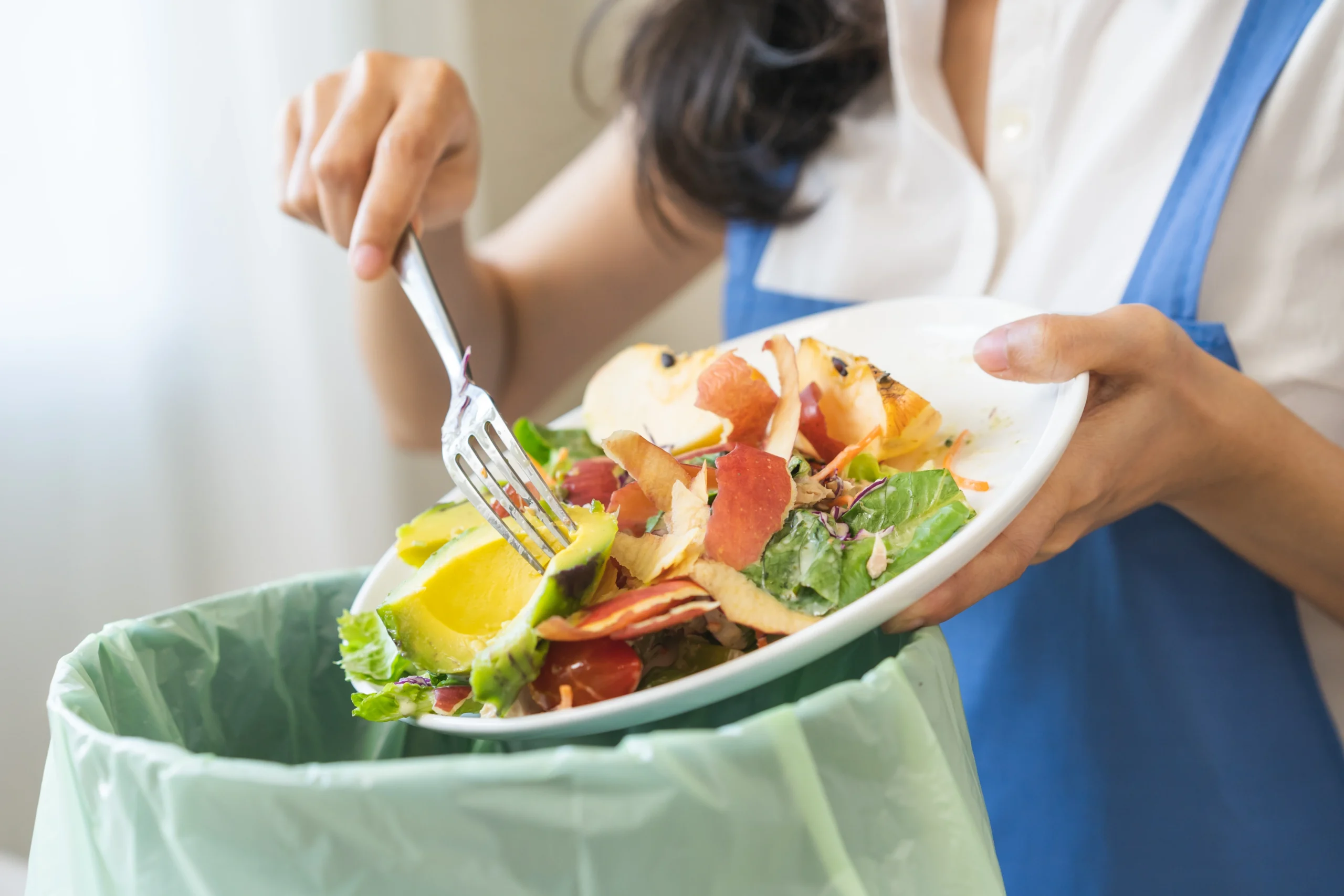
Some food is lost during preparation. Some spoils before it can be used. Some is produced in anticipation of demand that never materializes. Some is left uneaten by customers. Some surplus food remains perfectly edible but cannot be sold through normal channels.
UNEP’s Food Waste Index estimates that the food service sector generated approximately 290 million tons of food waste globally in 2022, representing 28% of the food waste generated by households, food service, and retail combined. Retail accounted for 12%, while households accounted for the remaining 60%.
In the United States, food accounts for about 24% of the material sent to municipal solid-waste landfills, and 58% of fugitive CH₄ emissions from those landfills. Food represents a large share of what enters the waste stream and an even larger share of the methane impact.
A Growing Toolkit for a Complicated Problem
Food waste prevention and diversion is increasingly possible at scale, thanks to a growing combination of policies, infrastructure investments, and programming. Several states and many municipalities have introduced bans on disposing of commercial food waste, forcing food waste producers—such as supermarkets, restaurants, and manufacturers—to divert their wasted food from disposal. Such bans encourage investment in infrastructure, including refrigerated food rescue trucks, composting facilities, and anaerobic digestion plants. In some states with such bans, no-cost assistance helps businesses meet their obligations, as the RecyclingWorks MA program offers in Massachusetts.
RecyclingWorks in Massachusetts, funded by MassDEP, offers free technical assistance to businesses, institutions, and municipalities, helping them prevent food waste, donate or redistribute edible food, and set up or improve programs to divert food scraps. The program receives over a thousand hotline inquiries each year and provides on-site help to hundreds of businesses to put sustainable prevention, donation, and diversion measures into practice.
From a Waste Stream to a Climate Issue
The climate significance of wasted food is easy to underestimate.
A tray of uneaten food does not look like a climate pollutant. A bin of spoiled produce does not look like CH4. A restaurant’s daily prep scraps do not look like a global climate challenge.
But multiplied across the commercial food system, these streams become substantial.
The latest report by UNEP makes it even clearer that cutting food waste is part of the wider effort to reduce greenhouse gas emissions, including CH4, while also tackling the inefficient use of resources in food production.
As the climate action roadmap shifts from preventing 1.5°C of warming to keeping the extent and length of overshoot as low as possible, curbing CH4 is becoming more important than ever.
Get Support for Businesses & Institutions
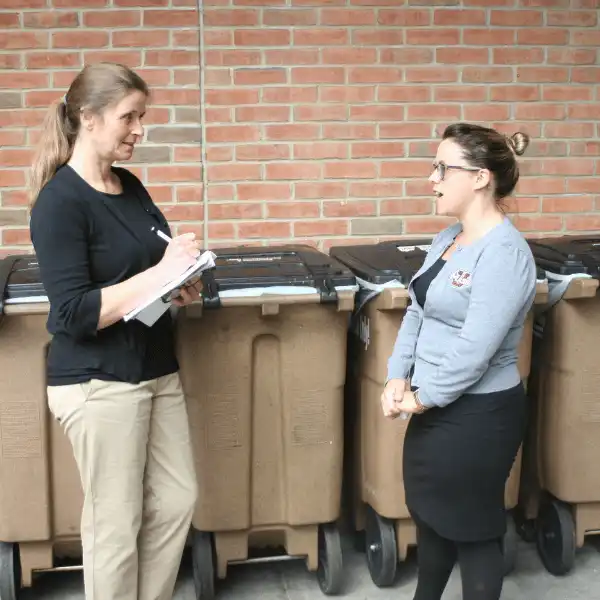
RecyclingWorks MA makes recycling, waste reduction, and food recovery easier for busy business owners, managers, and staff with clear, tailored recommendations you can act on. Get started today with:
- Waste Reduction & Recycling Consulting
Improve operations, simplify sorting, and uncover potential cost savings with customized, actionable guidance.
- Food Management
Reduce or repurpose food during preparation, identify surplus food for donation, set up efficient collection, and connect with donation or diversion partners.
- Site Assessments
Virtual or in person assistance to implement programs through evaluating materials handling, customized signage, and staff training.
- Waste Ban Compliance Support
We’ll walk you through requirements, timelines, and practical solutions aligned with Massachusetts waste bans. While we don’t assess or verify compliance, we can help you understand the guidance and put workable systems in place.

Ashley Muspratt joined CET in 2018, and since then, has spearheaded novel building decarbonization services, wasted food solutions, and financing opportunities for customers and partners. She has broad experience with the organization’s nation-leading wasted food programming, building sector decarbonization, and deconstruction. Ashley assumed the role of president in 2022, and as CET’s leader is deeply engaged in strategic planning, implementing diversity, equity, and inclusion initiatives, and expanding the breadth and efficacy of programs through operations, communications, and fundraising.
Ashley has a long track-record as a leader and innovator. Prior to joining CET, she founded and lead a waste-to-energy startup in sub-Saharan Africa, which converted human fecal sludge into industrial fuel. The company’s investors included the Gates Foundation, USAID, and the French Development Agency and was widely recognized for reinventing the economics of urban sanitation in low-income countries. Ashley has an MS in Environmental Engineering and PhD in Energy and Resources from the University of California, Berkeley.