
Colleges & Universities
Closing the Loop: How Amherst College Is Reducing Waste Through Move-Out & Move-In Reuse and Bicycle Repair
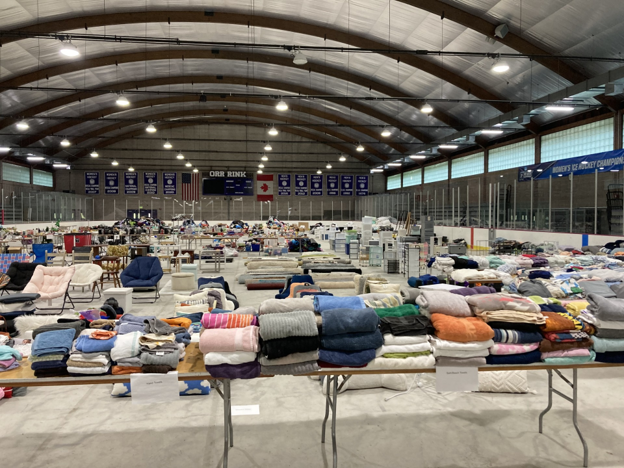
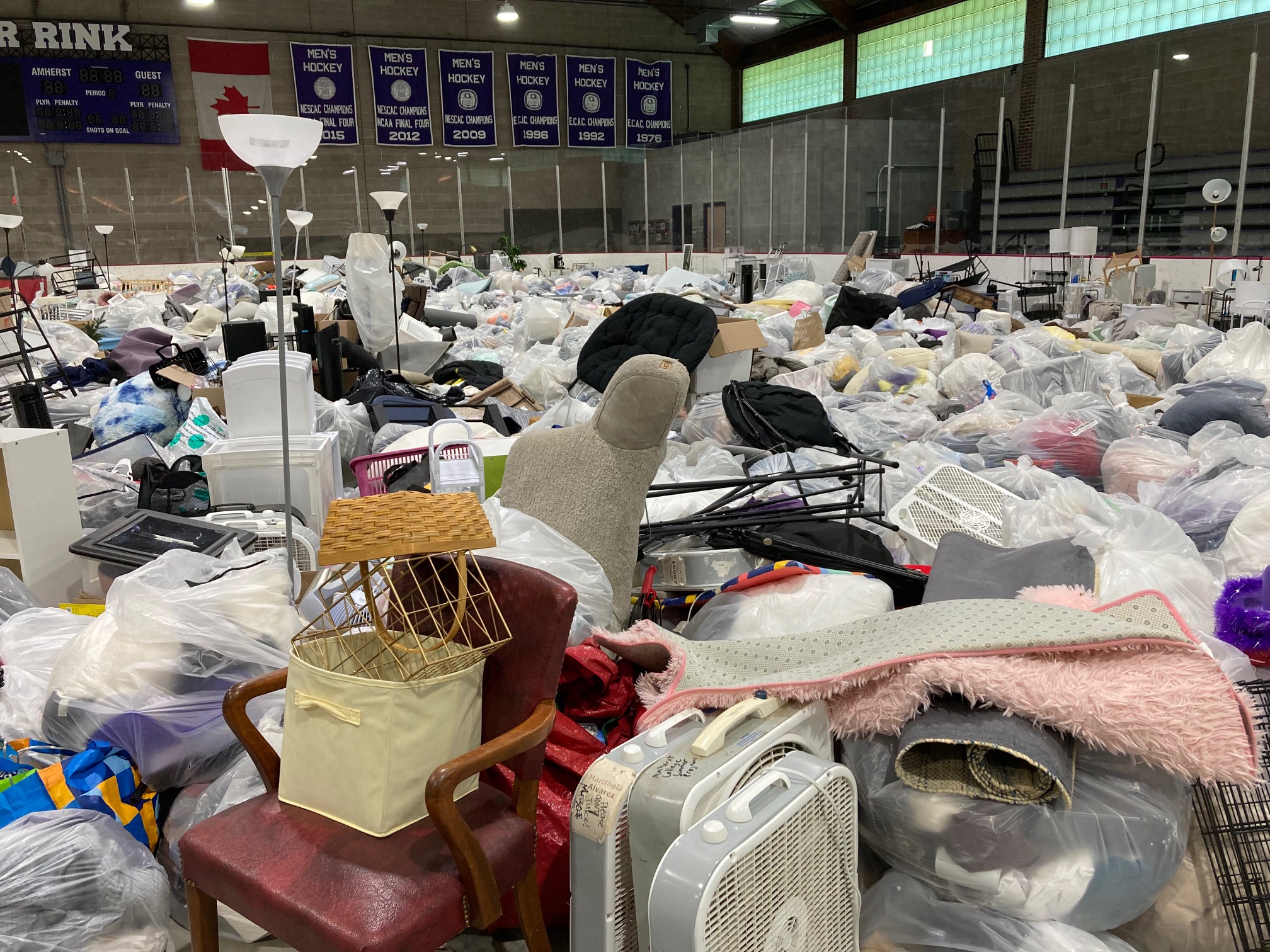
Each spring, Amherst College observed a significant volume of reusable materials (e.g., room décor, clothes, books) being discarded during student move out. Each fall, many of those same items, such as dorm room essentials, were being purchased again by incoming and returning students. Recognizing this pattern of waste and replacement, the Amherst College Office of Sustainability saw an opportunity to create a more circular system. Through collaboration with partners across campus, Amherst developed a comprehensive reuse program designed to keep valuable materials in circulation, reduce waste, and connect move-out donations with move-in needs.
Creating a Closed-Loop Reuse System
The program connects the end of one academic year with the beginning of the next through a coordinated collection, storage, and redistribution effort. During move-out, students are encouraged to donate unwanted items at designated collection locations throughout residence halls. Thousands of donation bags are gathered and stored over the summer in the unused ice rink, then sorted by category and prepared for a series of free reuse events.
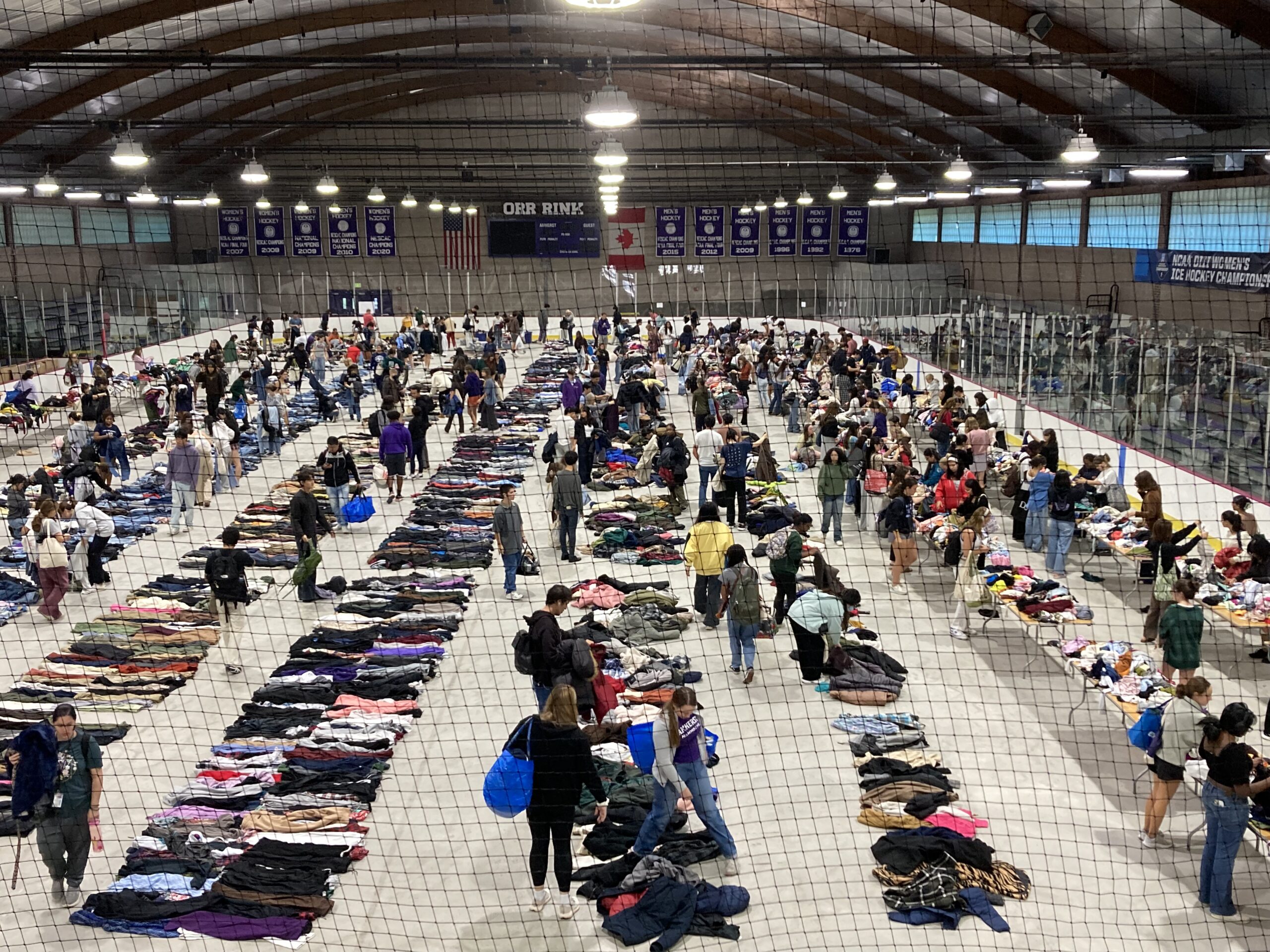
During move-in and orientation, incoming and returning students can select dorm furnishings, linens, school supplies, kitchen items, décor, and other essentials at an enormous no-cost Yard Sale. Additional events throughout the fall redistribute thousands of clothing items and stacks and stacks of books, while specialized items such as bicycles are reclaimed and restored by another campus reuse program. By prioritizing redistribution on campus before seeking external donation outlets, the college has created a more circular system that centers reuse over waste.
The Results: Keeping Materials in Use
The initiative has produced substantial environmental and economic benefits. Amherst College estimates that it has diverted roughly 15 tons of usable materials from disposal each year while redistributing thousands of clothing items and a wide variety of dorm room necessities. Over 90% of collected room furnishings and household goods are successfully placed back into use, along with most of the donated clothing and books. The student staff that sort the materials cull out damaged or unusable items, and the campus has added a website to clarify acceptable items. Any remaining items are then donated to the Franklin Area Survival Center, further spreading the benefits to the community.
Distribution of the goods to incoming students is also well organized. First-generation and international students get access to “shop” the free yard sale first during their orientations, then first-year and transfer students, and then any returning students, and finally, staff and faculty also get the opportunity to browse and select. This process supports both equity and orderly reuse events.
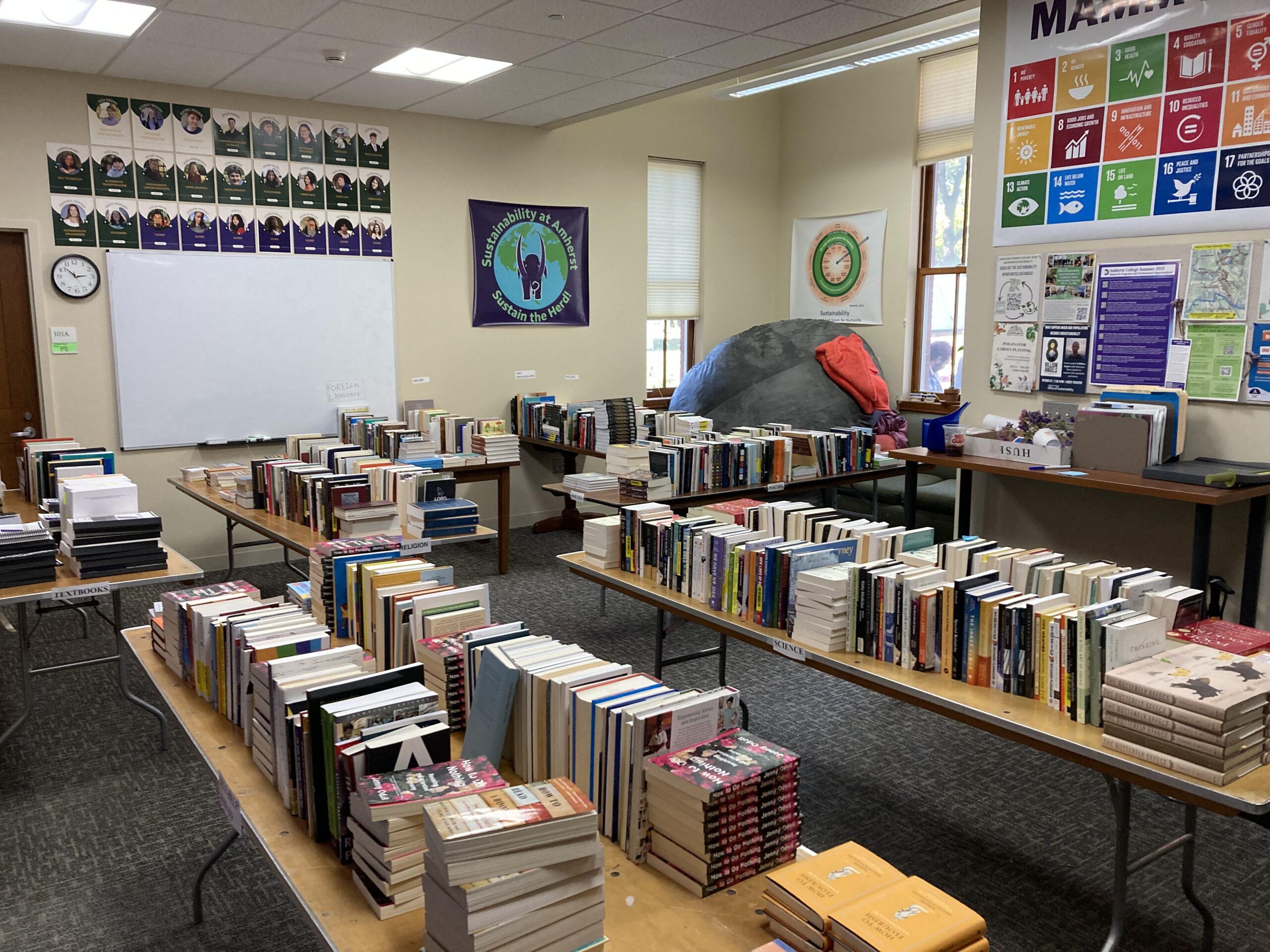
The financial benefits are also staggering. Avoided purchasing of gently used items is estimated to save students and their families at least $350,000. The program is estimated to save the college around $2,000 a year in hauling costs. In the coming school years, program leaders will be placing greater emphasis on documenting and weighing inventory to have an even greater sense of the volume of diversion.
The program has also become a well-attended part of campus life, attracting more than 1,000 participants annually and providing a valuable resource for students seeking free access to everyday necessities. What was once a significant waste stream has been transformed into a resource that benefits both the campus community and the environment.
Bicycle Reuse: The Tread Shed
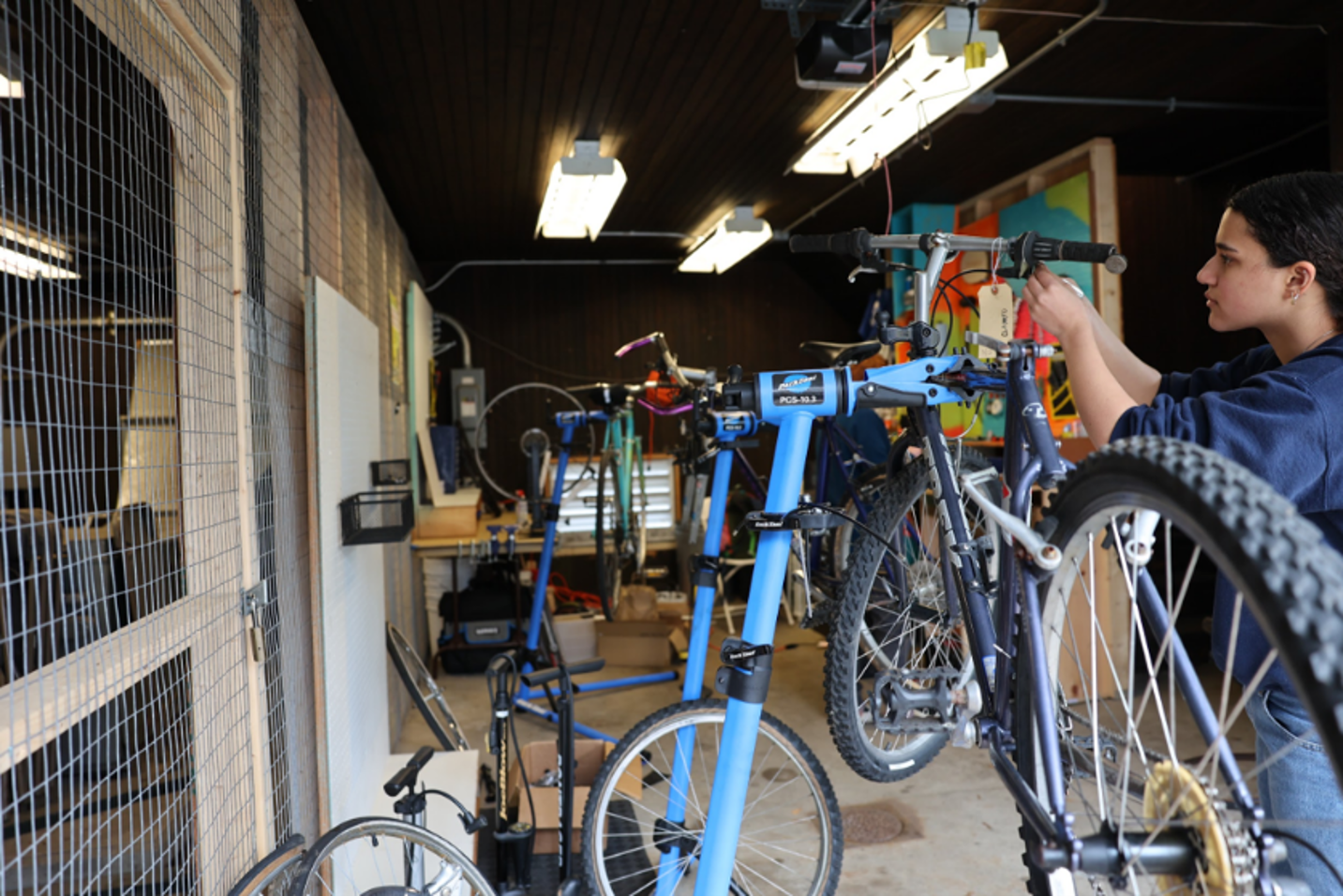
Like many colleges and universities, Amherst College faced a recurring challenge with abandoned bicycles. Each year, bikes left behind on campus would fall into disrepair and eventually be taken for scraps or discarded. In many cases, the repairs needed to keep these bikes in use were relatively minor, but students often lacked access to tools, repair knowledge, or transportation to off-campus bike shops.
In response to this issue, Amherst College launched the Tread Shed: a student-run bike co-op designed to keep bicycles in circulation while building a stronger campus biking culture. The program provides students, faculty, and staff with access to repair tools, maintenance workshops, and technical guidance from trained student bike technicians. The Tread Shed also established a system for collecting abandoned bicycles and giving them a second life through a volunteer-based work-to-own program. Additional initiatives—such as free bike storage during academic breaks and expanded indoor bike parking—help prevent bicycles from being exposed to the elements and abandoned in the first place.
As a result of the Tread Shed program, over 100 abandoned bicycles have been collected and diverted from disposal, creating a closed-loop system that extends the life of existing bikes and reduces waste. More than 30 bicycles have been repaired and returned to active use or claimed by students currently restoring them through the work-to-own program. The Tread Shed’s educational offerings have also been well received, with more than 50 students participating in workshops, training, and open repair hours during the academic year.
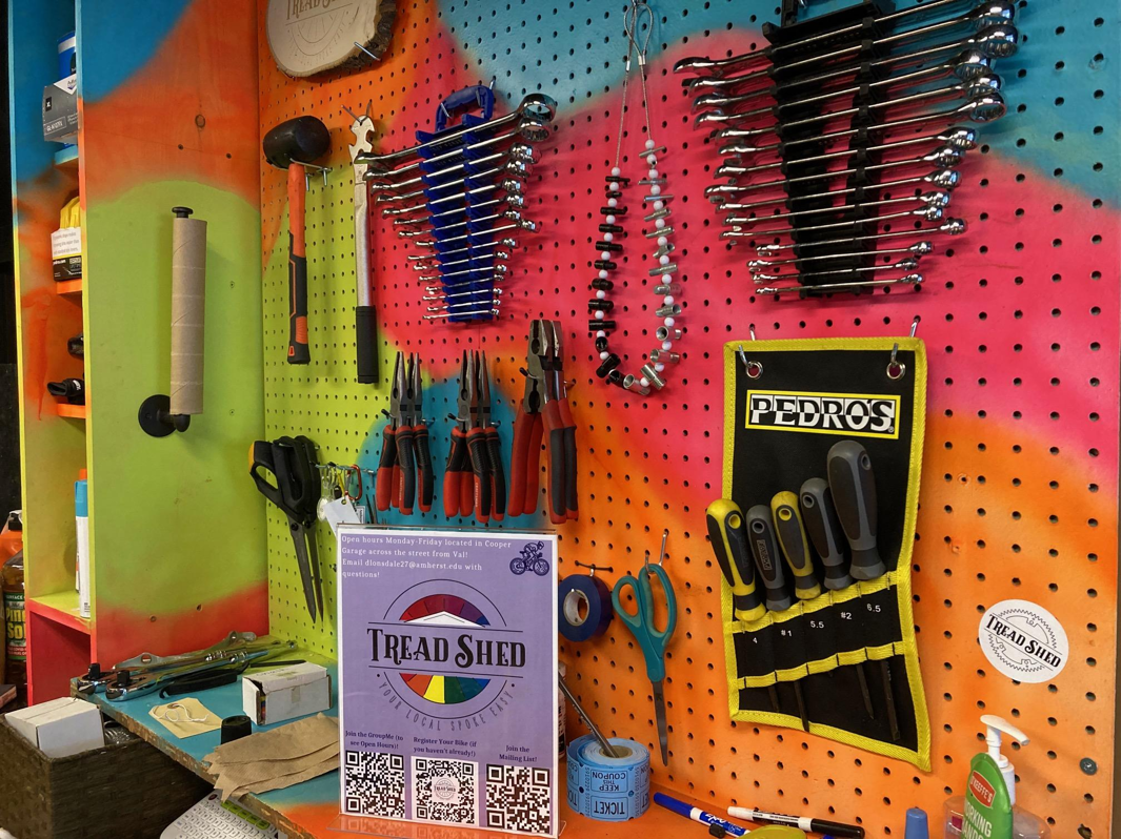
Beyond reducing waste, the program has greatly increased student access to affordable, emissions-free transportation while fostering a stronger biking culture on campus. As Amherst College looks ahead, it is exploring additional ways to expand bike access, including a potential long-term bicycle lending program.
Keys to Success
The success of the multiple reuse programs stems from strong collaboration among sustainability staff, housing personnel, facilities teams, student employees, and volunteers.
Here are some replicable aspects of Amherst College’s programs that aided in their success:
- Convenient donation opportunities, including integration into the College’s orientation for increased student awareness and ease
- Dedicated, convenient and large enough storage space
- Careful sorting procedures – the items get curated by student employees during the summer months
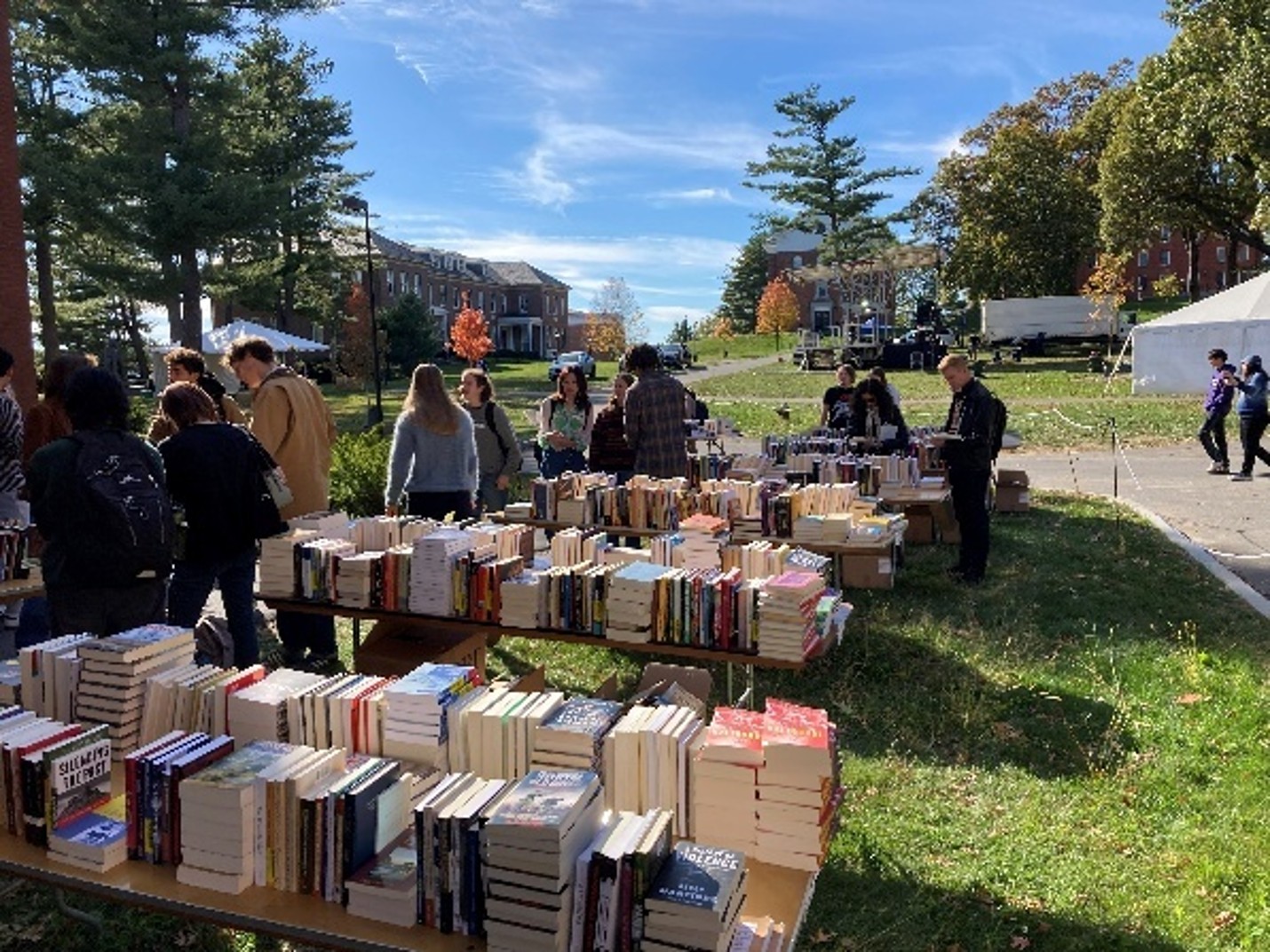
All of these elements have helped transform what was once a largely linear “buy-use-discard” system into a circular model that keeps resources in use for longer.
Looking Ahead
Amherst College continues to refine and expand the program through improved outreach, more detailed tracking of recovered materials, and ongoing efforts to increase participation. For institutions interested in launching a similar initiative, the College’s experience demonstrates the value of cross-campus partnerships, accessible collection systems, adequate storage capacity, and dedicated staff or student leadership. By connecting move-out donations with move-in needs, colleges can significantly reduce waste, lower costs for students, and create a lasting culture of reuse.
Information and photos have been provided through a conversation with Weston Dripps, Director of Sustainability at Amherst College. Read the Campus Race to Zero Waste case studies to learn more about the Reuse and Tread Shed programs. To connect and learn more about these successful programs, you can email Wes at wdripps@amherst.edu.
RecyclingWorks in Massachusetts (RecyclingWorks MA) is funded by the Massachusetts Department of Environmental Protection (MassDEP) and delivered under contract to MassDEP by CET. RecyclingWorks MA is available to assist colleges and universities with reuse and waste reduction programs. This Tip Sheet for Colleges and Universities covers the MassDEP waste disposal ban materials typically generated on campus and best practices for managing them. Call or email our hotline to receive guidance and assistance: (888) 254-5525 or info@recyclingworksma.com.